Category: Uncategorized

  • Fiber Carding, Hand

    Carding is used to align the fibers in a fleece ahead of spinning or other uses for the fiber. Class will concentrate on carding of fine or medium wools. Samples of other types of carded fiber, including commercially carded fibers will be displayed. Students will card wool using a set of instructor provided hand-cards during class. Techniques for using the carded batts will be demonstrated, including the use of a diz. Fiber for students to card will be supplied by the instructor.
    Class is portable.
    Time: Ninety-Minutes
    Minimum Age: 6
    Maximum Class Size: 10
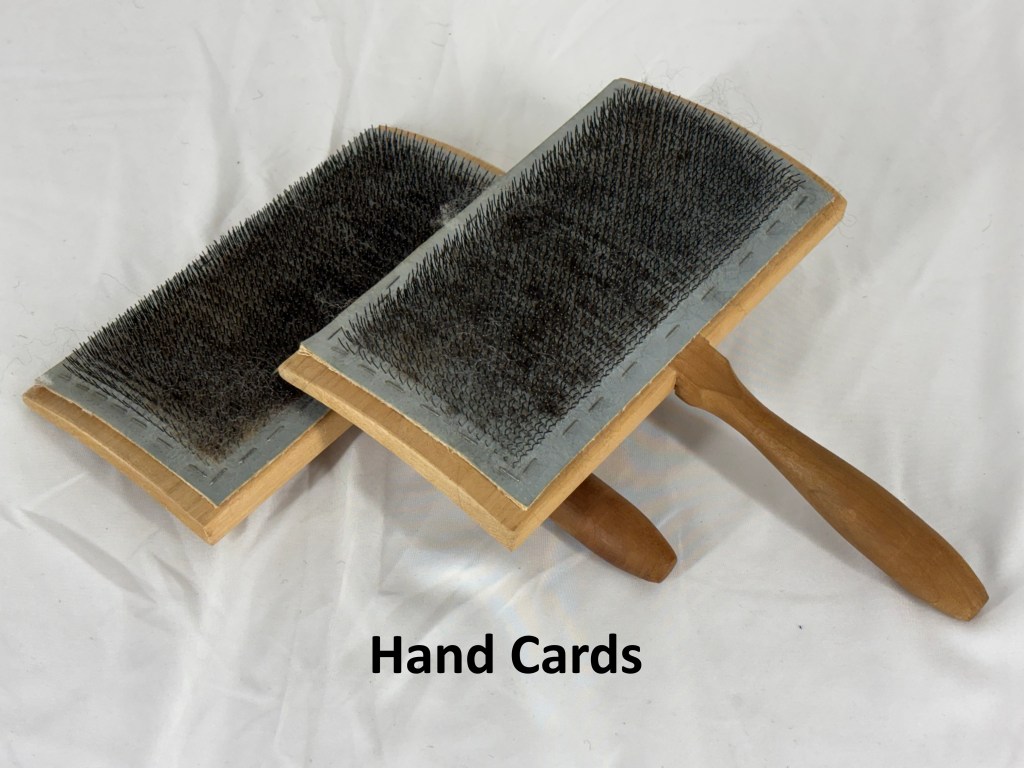
    Set of Hand Carders
  • Fiber Felting, Dry, Introduction

    Dry Felting is the term used when felting needles are used to pull the fibers together to create a felted structure. Dry Felting is often used to repair a felted item and can be used to make three-dimensional felt structures. Students will use felting needles to create a felted object of their choice that they can take home. Kit: contains fleece, foam pad, two felting needles and a handle to hold one felting needle. Felting needles are very sharp, so must be treated with caution before, during use, and afterwards.
    Class is portable.
    Time: One-Hour
    Minimum Age: 12
    Maximum Class Size: 8

  • Fiber Felting, Wet, Project

    Felting is a technique used to mesh fibers together, usually making some sort of sheet of felted material for multiple purposes. The fundamental principle of wet felting uses water, soap, and agitation to enable the fibers to mesh together. Examples of felted objects will be displayed and discussed, emphasizing techniques used to create the items. Students will felt a small coaster shaped object that they can take home from the class.
    Class is portable.
    Time: Thirty-Minutes
    Minimum Age: 5
    Maximum Class Size: 8

  • Fiber Spinning, Hand Spindle

    Fundamentals of using a drop spindle to make yarn will be demonstrated. Display of different types of spindles will be provided and differences highlighted. Fiber drafting technique and use of a hand ‘drop’ spindle will be demonstrated. Students will be given a drop spindle, wool to spin, and aided in developing good drafting technique to make yarn. Kit: includes a drop spindle, fleece to spin, and full instructions on use of the drop spindle.
    Class is portable.
    Time: Forty-Five-Minutes
    Minimum Age: 6
    Maximum Class Size: 10
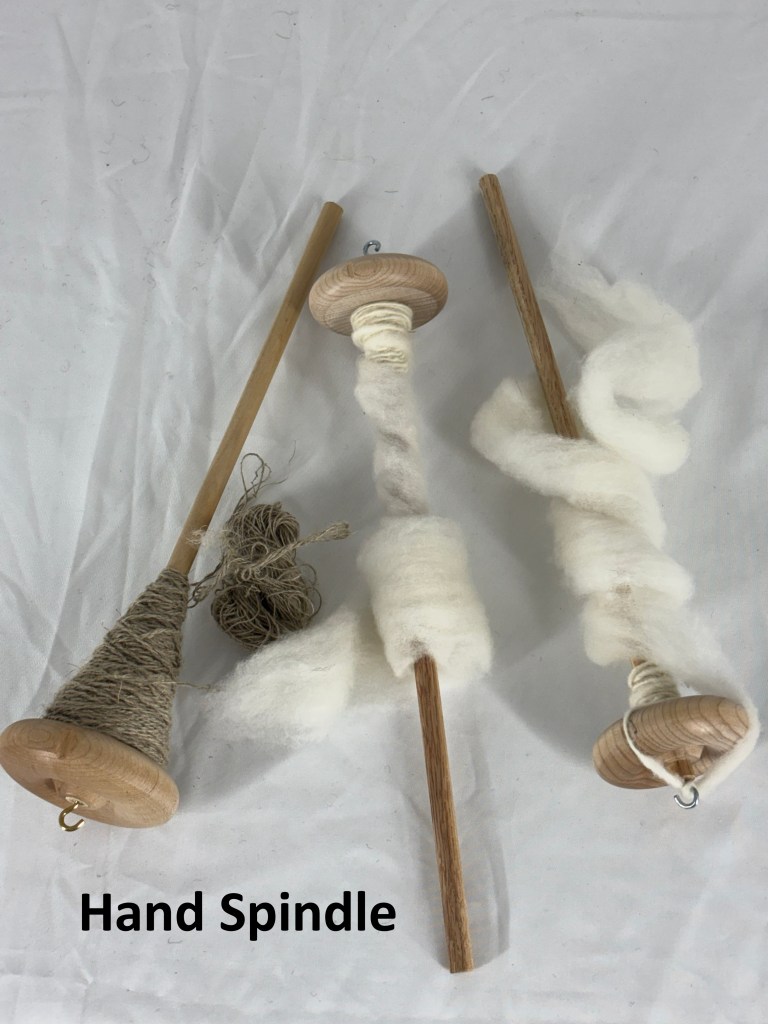
    Three Hand Spindles with yarn on each
  • Fiber Spinning, Spinning Wheel

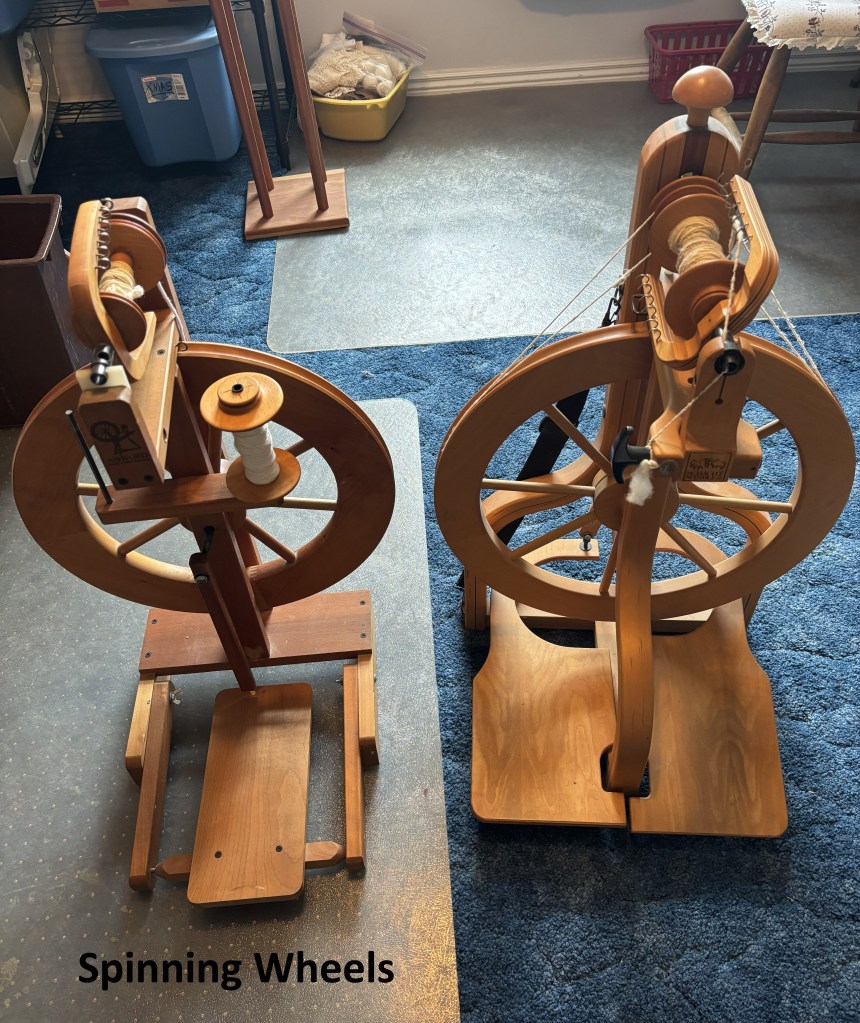
    Introduction to spinning with a spinning wheel. Multiple types of spinning wheels will be shown and the differences discussed. Proper tensioning and other aspects of wheel use will be discussed. Drafting technique and preparing the fiber for spinning will be discussed. Students will have a short time to try out the different types of spinning wheels.
    Class is portable.
    Time: One-Hour
    Minimum Age: 8
    Maximum Class Size: 6

    Spinning Wheels
  • Fiber Washing, Wool

    Techniques that can be used to wash raw wool (straight off the animal) will be demonstrated. Students can be involved if desired. Process guide will be provided for students. Differences in washing technique for different types of “wool” will be discussed. Scope of class discussion and level of student participation to be determined at time class is arranged. Material costs may apply.
    Time: One-Hour
    Minimum Age: 8
    Maximum Class Size: 6

  • Fly Tying, Introduction

    Tools for one student at a time. Student will be introduced to the techniques and tools used to tie flies for fishing. The student will be helped to make one fishing fly of their own design. Material charges may apply.
    Class is portable.
    Time: One-Hour
    Minimum Age: 10
    Maximum Class Size: 1

  • Histories, Writing

    Examples of written histories will be available to examine. Processes and techniques to write histories will be shared, along with handouts summarizing the steps to organize and produce different types of personal histories. Tools that can be used will be overviewed. A decision making process used to plan and implement this type of document will be discussed. Question and Answer session for questions about specific student history story writing challenges will be entertained.
    Class is portable.
    Time: One-Hour
    Minimum Age: 8
    Maximum Class Size: 6

  • Jewelry Fabrication

    Class introduces the use of soldering and techniques to combine different materials to create more complex jewelry. Most of the class will deal with brass and copper to practice the techniques. Principles of silver soldering will be discussed and demonstrated. Class will build on uses of wire and sheet materials to make more complicated jewelry and to mount stones or other items into a fabricated jewelry item. Techniques for preparing materials, soldering, cleaning, and polishing the finished item will be covered. There will be a charge for materials for the class.
    Time: Two-Hours
    Minimum Age: 12
    Maximum Class Size: 6

  • Jewelry Open Shop

    Jewelry Open Shop is a time dedicated to a small group of people working on a specific type of jewelry. Amount of time for class, and type of projects will be determined when class is arranged. Tools and materials to support the selected category of jewelry and some examples will be shown to the class. Categories of items include but are not limited to: Porcelain Dangles, Braided and Corded constructions, Leather, Chains and Wire fabrications, and Fabricated (Soldered) construction types. Limited stock of silver wire types available for the open shop. Type of Jewelry limited to imagination of the student and materials agreed to at time class is arranged. Charge for shop time and materials used. Typical class project will be the creation of custom dangles for jewelry use.
    Time: Time and emphasis arranged in advance
    Minimum Age: 12
    Maximum Class Size: 6